The
Internet presents the most powerful tool humanity has ever known - how we wield
it will have a dramatic impact on the future. Like never before, the individual
has a voice, can make that voice heard and rally support – all from their
desktop. While governments and corporations the world over learn how to
streamline their Internet use for profitability and propaganda, the average
user must find a way to keep up. Because the Internet is flooded with
information: art, literature, images, videos, charts, the entire range of
creative and informative media is centralized on the web. The Internet provides
the first truly open medium; a place where anyone can meet anyone and any task
can be discussed. It becomes a question of how we utilize the web – if we
succumb to distraction or mobilize to action. If
the risk of becoming lost in the Internet's vast catalog of information can be
avoided, 21st century
individuals and corporations with focus and drive can wield this powerful tool
to reshape the political landscape of the world.

For
the individual, distraction is a perilous trap we are all destined to give in
to at some point in time. As Nicholas Carr points out, the very nature of the
Internet is to “seize our attention only to scatter it” (Carr, 121). Distraction is unavoidable – and for the average user (a term that encompasses nearly half the population) the Internet (and distraction) is a way of life.
Carr takes an especially dystopian outlook on this new way of living: “The
great danger we face as we become more intimately involved with computers...is
that we'll begin to lose our humanness, to sacrifice the very qualities that
separate us from machines” (Carr, 201). Thinking about it more constructively,
the greatest danger the connected public faces from distraction is in wasting
the connectivity. The Internet is more than a source of entertainment: it is a
tool for finding and conversing with like-minded individuals. This single
invention could easily change the way we approach democratic government, just
as it’s changed the way we see music, video, TV, shopping, talking, work,
games, dating, and the list goes on.

While
distraction is fine, and even fun in doses, a perpetually distracted society
will not notice they are being exploited. When a small number of individuals
control the media that is doing the distracting, the people who are distracted
are in no small way at the hands of that minority. Considered the Egyptian revolution, as detailed in Wael Ghonim’s work Revolution 2.0: “the media's suppression of the physical world made
the virtual world a critical alternative for promoting the cause” Ghonim, ch3).
The government and the media are working together in Egypt to keep the people distracted.
A terrible situation that Ghonim and other Internet users realized could be
capitalized on. Because these individuals were less distracted by conventional
media and spent their online time in the realm of social media – media produced
by the community at large – they could see the potential. By creating a web of
connections, they were able to spread their message and subvert the government’s
main stream media campaign.
What
this highlights is the power of social media and the Internet as a tool. While
there have been numerous programs in the past that have varied and incredible
uses, never before has one existed that presents this opportunity for
connection. Through media like Facebook, Twitter, Youtube and the various other
platforms out there, individuals are able to share their thoughts, fears, art
and lives with a broad range of people across enormous geographic area. The
entire world is connected through this technology. As Clay Shirkey notes in his
book, Cognitive Surplus, “a democracy
is working when its citizens are content enough not to turn out in the streets;
when they do, it’s a sign something isn’t right” (Shirkey, 29). The Internet
and social media act as a virtual “street” onto which unsatisfied citizens can
exercise their democratic rights.
 |
| OWS on the real Streets |
There
is a change underway in the course of the industrialized human’s life. Machines
have become increasing important to societies across the world – and none more
so than the personal computer, now sized down so small they fit into our
pockets. These “universal machines” as Alan Turing called them (qtd. Carr, 87)
have profoundly reshaped the way we approached social life, friendship and
interaction. The shift is unavoidable for a commercial culture like America’s.
Shirkey describes it quite simply: “The change is a matter of simple fact –
digital networks make sharing cheap and potential participation nearly
universal” (Shirkey, 83). A cheap product with universal appeal and access is a
time honored combination in the capitalist world. This is a product that
essentially sells itself – but it’s also so much more than that. The Internet,
via social media programs, is the tool by which humanity will define itself in the
near and possibly distant future.
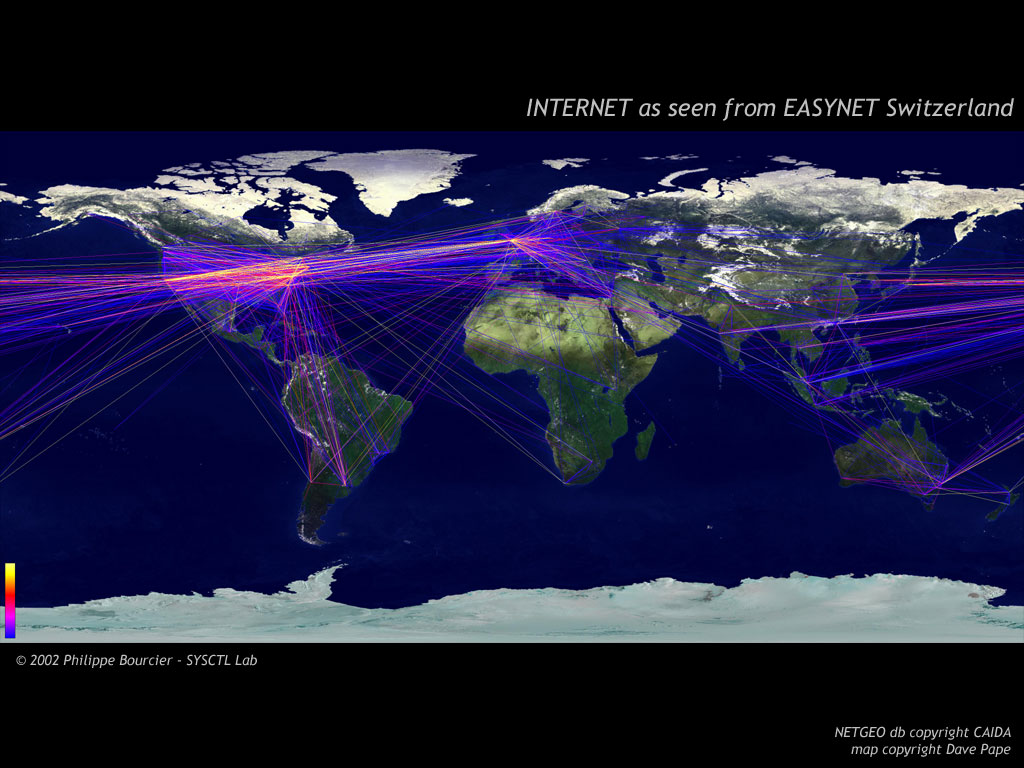
For
most users, it’s hard to appreciate the vast power and potential of the
Internet. It’s easy to be distracted, to let our imaginations run wild in the
great playground of the Internet. This distraction can be dangerous, as
mentioned previously, because when we are distracted we are not as engaged and
connected. This danger is exemplified in Google, the uber-company that is
slowly creeping into every aspect of the Internet. As Carr says, “Google doesn’t
believe that the affairs of citizens are best guided by experts. It believes
that those affairs are best guided by software algorithms” (Carr, 151). If
people give up their decision making to machines, they also give up some of
their ability to think, to decide for themselves what they want. While company’s
like Google are always going to be present in this world, an individual
awareness of them is the best way to avoid being controlled.

The
Internet has become a mainstay of our world. It is the way we connect, the way
we shop and the way we play. The potential of the net that is not being fully
tapped at this point is the political aspect. The Internet presents the most
powerful and simplest method of democratically connecting in history. Ghonim
reflects on this at the end of his book, “the Egyptian revolution showed us
that the great mass of people who are normally risk-averse, aren’t normally
activists, can become extraordinarily brave and active when they unite together
as one” (Ghonim, 293). The Internet is the tool for connecting these people,
who might otherwise never know of each other’s existence. The potential exists
for even greater forms of direct democracy with the Internet as the method of
connecting.
The
Internet is not going anywhere. It’s a part of our lives now, “such
technologies [the map, clock and web] become part of 'the very stuff out of
which man builds his world'” says Carr (Carr, qtd Weizenbaum, 200). As we begin
building the future the Internet will have a prominent place in that future
that everyone, from the CEO to the President to the lowly janitor, can have a
part in shaping. Because we are such social creatures, the draw of connectivity
and socializing will only increase as we gain more opportunity to connect. It
is a question of how we connect: do we come together as the Egyptians did to
assert the will of the people on the government, or do we connect to play Wordswith Friends and share silly pictures? There may be no right answer, but the
answer that serves the greater population and has the potential to improve our
world should be obvious.
